4K Action Camera Explained: A UK Buyer's Guide
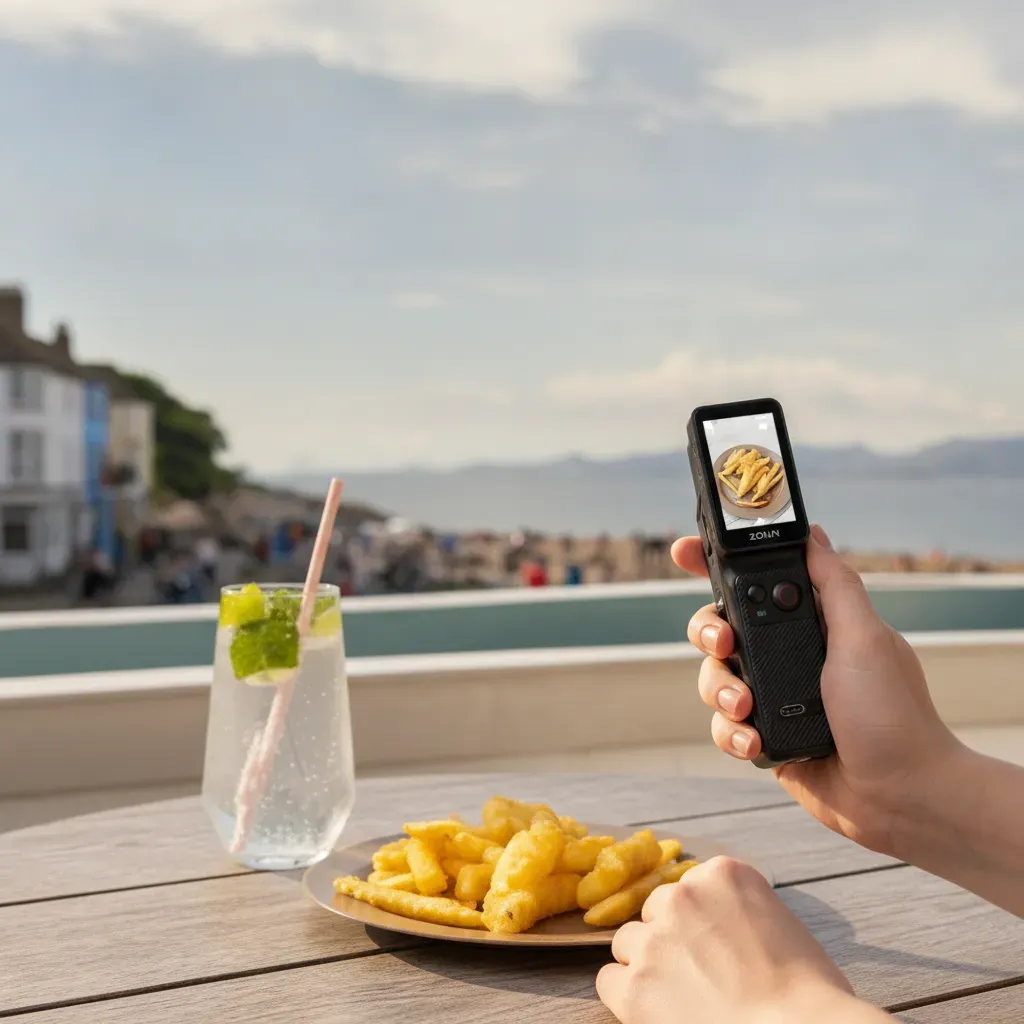
TL;DR: A 4K action camera records Ultra HD (3840 × 2160) footage in a body small and tough enough to mount, carry or hold in bad weather. The 4K badge itself is now the cheapest part of the spec sheet: what separates models is the sensor behind it, the quality of the stabilisation, real battery runtime and how much kit you still need to buy before your first usable clip. This guide breaks those lines down one by one, so you can compare cameras on the same basis and pay for performance, not the logo.
Key Takeaways
- 4K means 3840 × 2160 resolution — four times the pixels of Full HD, with real benefits for detail and cropping headroom.
- Two cameras that both say “4K” can perform very differently: sensor size, processing, stabilisation and sustained battery runtime decide the result.
- Compare complete kits, not bare bodies — a memory card, waterproof case and grip can add real cost to a camera that looked cheap on the listing page.
- 4K at 30fps covers vlogging, travel and cycling; only fast-action slow motion genuinely demands the higher frame rates that flagship prices buy.
- The SJCAM C400 Creator Bundle (£292.90 inc VAT) ships with a 64GB card, creator grip and 30m waterproof case, so the out-of-box cost is the whole cost.
What does 4K actually mean on an action camera?
4K UHD is a fixed standard: 3840 × 2160 pixels, four times the pixel count of 1080p. On an action camera that buys you two practical things. First, visibly sharper detail on TVs, laptops and newer phones. Second, editing headroom — you can crop into a wide shot, straighten a horizon or punch in for a tighter frame and still export at Full HD without the result looking soft.
What 4K does not tell you is how good the footage will look. Resolution is a container, not a guarantee. A small sensor with weak processing produces 4K files that fall apart in dim British light, and shaky 4K is just sharper shake. That is why the rest of the spec sheet matters more than the headline number once every camera on your shortlist says 4K.
Frame rate is the first line to check. At this end of the market, 4K at 30 frames per second is the norm — the SJCAM C400 records 4K/30fps and steps up to 60fps at 2K resolution when you want smoother motion. Cameras offering 4K at 60fps or beyond exist, but they sit in a distinctly higher price bracket, which matters when you get to the total-cost comparison below.
4K action camera vs smartphone: which should you actually film with?
A fair question — recent flagship phones shoot excellent 4K. But the comparison changes once you film on the move. A dedicated 4K action camera is built for exactly the situations where a phone struggles:
- It frees your phone. On a day out your phone is the map, the tickets and the emergency line. Handing it an hour of 4K recording drains the battery you actually need.
- It mounts anywhere. Handlebars, helmets, chest straps and grips are designed around the action-camera form factor, not a 200g glass slab.
- It shrugs off weather. Weather-resistant bodies and proper waterproof housings survive conditions that would end a phone's day.
- It holds a wide, stable frame. Wide fields of view plus dedicated gyro stabilisation are tuned for movement, not for handheld snapshots.
Honest counterpoint: if you only film static pieces to camera indoors, a recent phone on a small tripod is genuinely hard to beat and costs you nothing extra. The action camera earns its place when movement, weather or mounting enter the picture.
Reading the spec sheet: the lines that matter
Sensor and processing, not just megapixels
Marketing pages lead with megapixels — the C400 captures 20MP stills, for instance — but video quality tracks sensor light-gathering and processing more than pixel count. There is no shortcut here: look for sample footage shot in flat, overcast light rather than promotional showreels shot in California sunshine. Grey-sky performance is the honest test for a camera that will live in Britain.
Stabilisation quality
Electronic image stabilisation (EIS) uses gyroscope data to counteract shake before the file is saved. Multi-axis systems — the C400 uses a 6-axis gyro — handle the combined pitch, roll and translation of walking or riding far better than basic two-axis smoothing. If you compare models on one spec beyond resolution, make it this one: stabilisation is the difference between footage you publish and footage you delete.
Battery: quoted versus sustained
4K recording is the most demanding thing an action camera does, so ignore best-case figures quoted at lower resolutions. The C400's published numbers are usefully specific: roughly 90–100 minutes of continuous 4K/30fps recording from its 1200mAh battery, extending to around 120 minutes at 1080p. Whatever camera you choose, expect cold weather to trim real-world runtime and plan longer days around top-ups rather than one heroic battery.
Screens and control
A rotatable touchscreen changes how usable a camera is when you are your own camera operator — you can confirm framing instead of guessing. The C400 pairs a 2.0″ rotatable touchscreen with a 1.3″ front display for exactly that reason. If you film yourself, treat a self-framing screen as a core spec, not a luxury.
The complete-kit test: compare total cost, not listing price
Here is the comparison most spec sheets quietly avoid. A bare camera body cannot film anything usable until you add a fast memory card, and for UK conditions you will usually want a waterproof housing and some form of grip or mount. Price those separately and a “cheap” camera stops being cheap.
Run the same test on any shortlist: what does it cost to get from the box to a usable first clip? The C400 Creator Bundle answers with one number — £292.90 including VAT (£244.08 ex VAT) covers the camera, a 64GB high-speed card, the creator handle and a 30m-rated waterproof case, with free UK next-day delivery and 30-day returns behind it.
Apply the same honesty in the other direction: the C400's external microphone route needs the official SJCAM USB-C mic adapter, which is not in the box. If voice quality is central to your plans, add that adapter to the C400's total — exactly as you would add the missing card and case to a rival's price. That is what comparing like for like means.
When 4K/30fps is enough — and when it is not
Buy the spec your footage actually needs. 4K at 30fps covers travel films, vlogs, commuting and cycling clips, walking tours and everyday content — the large majority of what UK buyers film. The C400's 2K/60fps mode adds a faster-motion option for the occasional high-speed day.
Where a £292.90 bundle should not pretend: if your content is built on buttery 4K slow motion of downhill runs or motorsport, you need 4K/60fps or higher and should budget for a flagship — expect to pay considerably more once its card, case and mounts are counted. Likewise, night filming pushes every small sensor hard; no action camera in this class is a low-light specialist. Knowing where the ceiling is stops you paying twice.
Where to go next on this site: new to the category entirely? Start with the complete action camera guide for UK creators. Filming rides, see the action camera for biking guide; filming in and around water, the waterproof action camera guide covers ratings and cases; and if your priority is pieces to camera, read the 4K vlogging camera guide.
Frequently asked questions
Is 4K worth it over 1080p on an action camera?
For most UK buyers, yes. 4K captures four times the pixels of 1080p, which means sharper detail on modern screens and enough headroom to crop or reframe clips for different platforms while still exporting at Full HD. The trade-offs are larger files and shorter battery runtimes, so pair 4K recording with a fast memory card and a realistic charging plan.
What frame rate do you need on a 4K action camera?
4K at 30fps suits vlogging, travel, cycling and most everyday footage. Higher frame rates such as 4K/60fps mainly matter if you want smooth slow motion of fast action, and cameras that offer them generally cost considerably more. A middle path many cameras offer, including the SJCAM C400, is dropping to 2K at 60fps when you need faster motion handling.
What memory card does 4K recording need?
Look for a microSD card rated U3 or V30 or better, which guarantees the sustained write speed 4K bitrates demand. Slower cards can stop a recording mid-clip. The C400 Creator Bundle includes a 64GB high-speed card and supports cards up to 128GB.
Do you need a gimbal with a 4K action camera?
Usually not for walking, cycling or handheld filming. Modern multi-axis electronic stabilisation, such as the C400's 6-axis gyro system, smooths typical hand shake and road buzz on its own. A gimbal only earns its place for deliberately cinematic moves like long tracking shots.
Ready to start your vlogging journey with ActSJC?
Get the Bundle — £292.90